Magyar


Thank you! Your submission has been received!
Oops! Something went wrong while submitting the form.
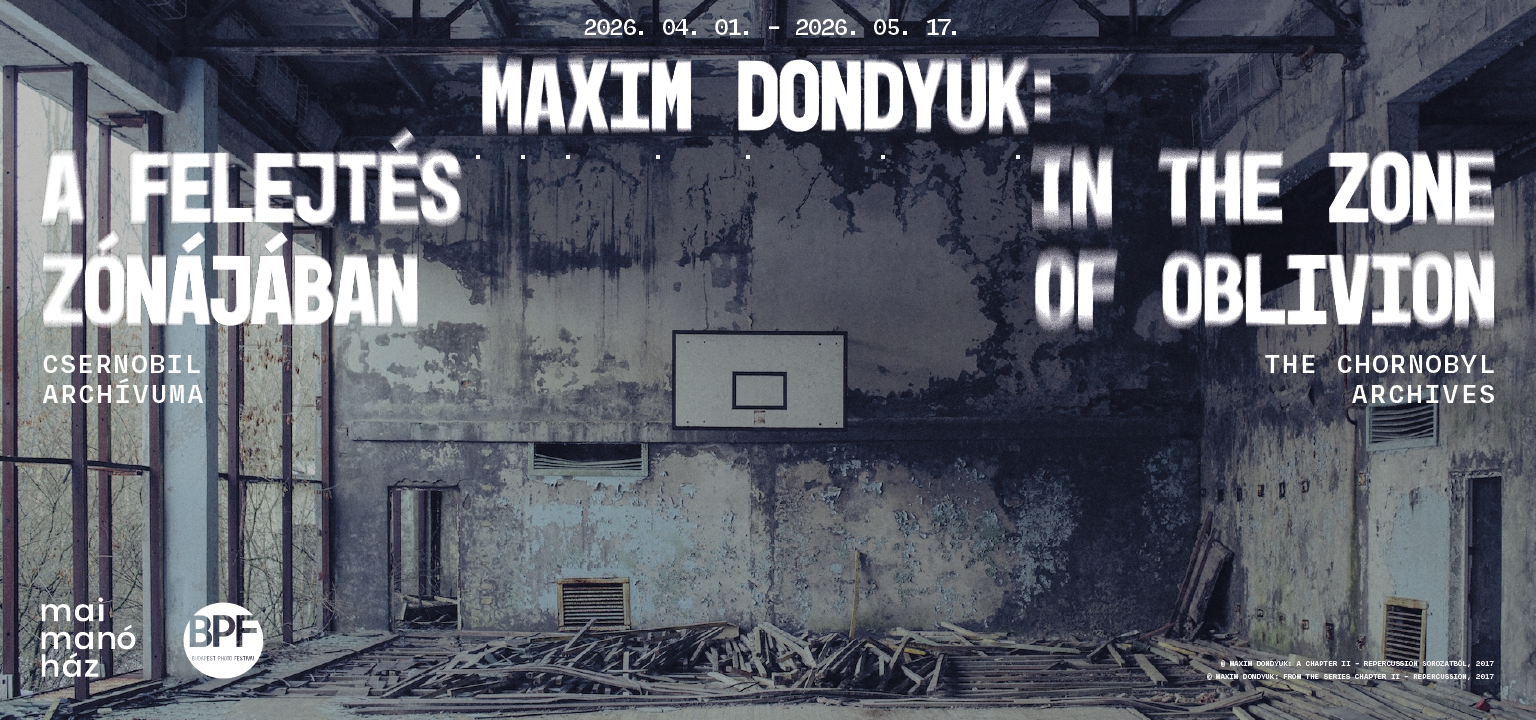
The exhibition is open to the public:
1 April 2026 – 17 May 2026
Curator: Gáspár Kéri
Opening: 31 March 2026, Tuesday, 6 pm
The exhibition will be opened by Alinda Veiszer, journalist.
We are pleased to inform our visitors that tickets for the exhibitions and programs at Mai Manó House are now available through multiple channels. To make planning your visit even more convenient, we offer the following options:
Forty Years in the Shadow of the Zone
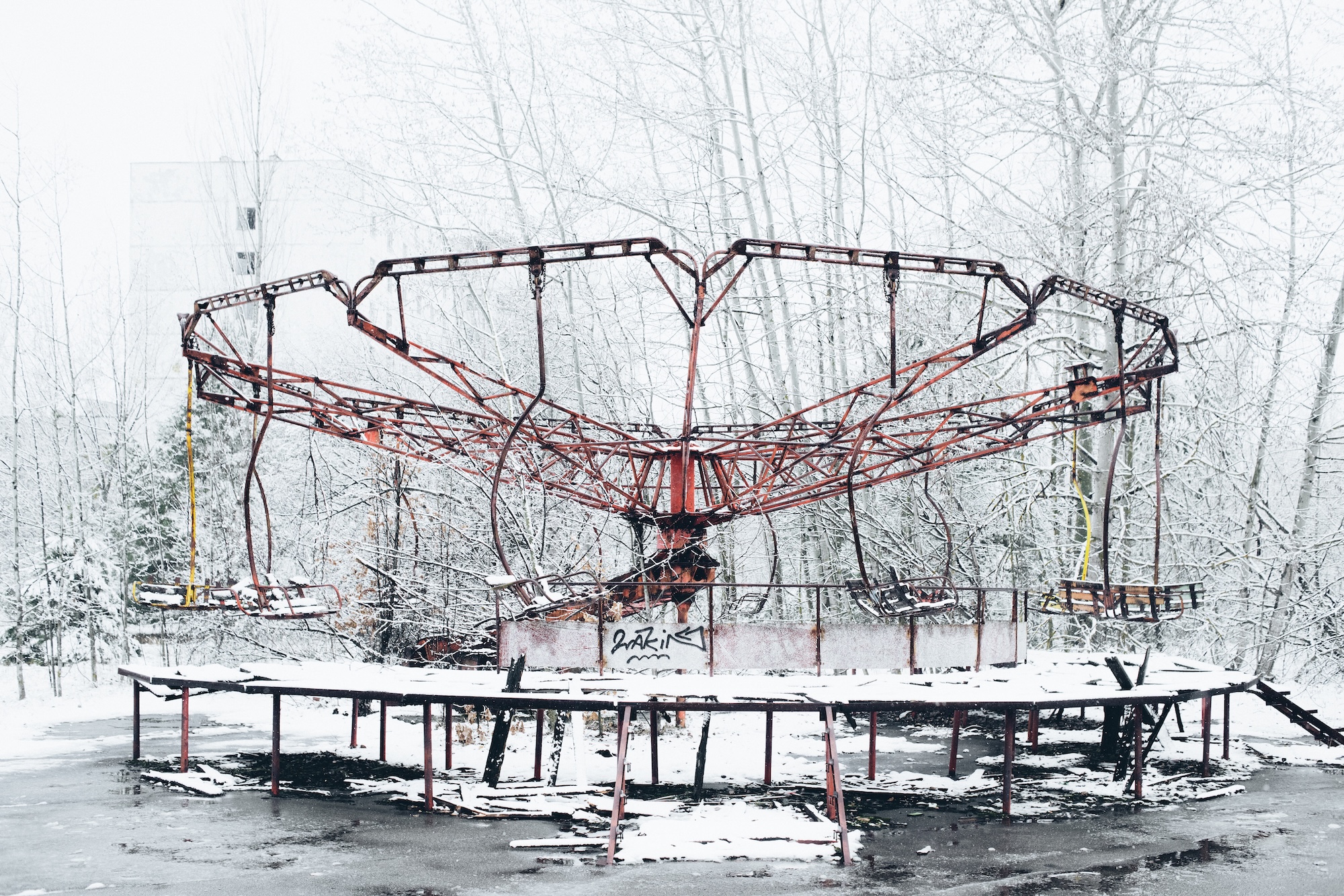
It is the spring of 2026. Forty years have passed since the explosion of Block 4 at the Chornobyl nuclear power plant on April 26, 1986, which irrevocably altered the course of history and forever changed our trust in technology. Four decades is enough time for an event to become a memory, then history, and finally a myth. This exhibition by Ukrainian visual artist and photographer Maxim Dondyuk at the Mai Manó House is positioned at this critical point in that timeline. It arrives at a moment when the surviving traces of the Zone's microhistory—family photographs, letters, and postcards—stand at the brink of destruction. In the Zone of Oblivion – The Chornobyl Archive, which presents a selection from the artist’s project of over 20,000 artifacts, is not a conventional anniversary commemoration but a powerful attempt to arrest the process of collective amnesia.
On the Threshold of the Visible and the Invisible
Whenever we think of Chornobyl, our imagination is flooded with the well-known tropes of post-apocalyptic pop culture. Dondyuk, however, has consciously turned his away from these visual clichés. Rather than focusing on the aesthetics of decay, his work seeks to reconstruct collective memory. He does not merely observe and document but acts as a rescuer and reinterpreter of the fragments of the past.
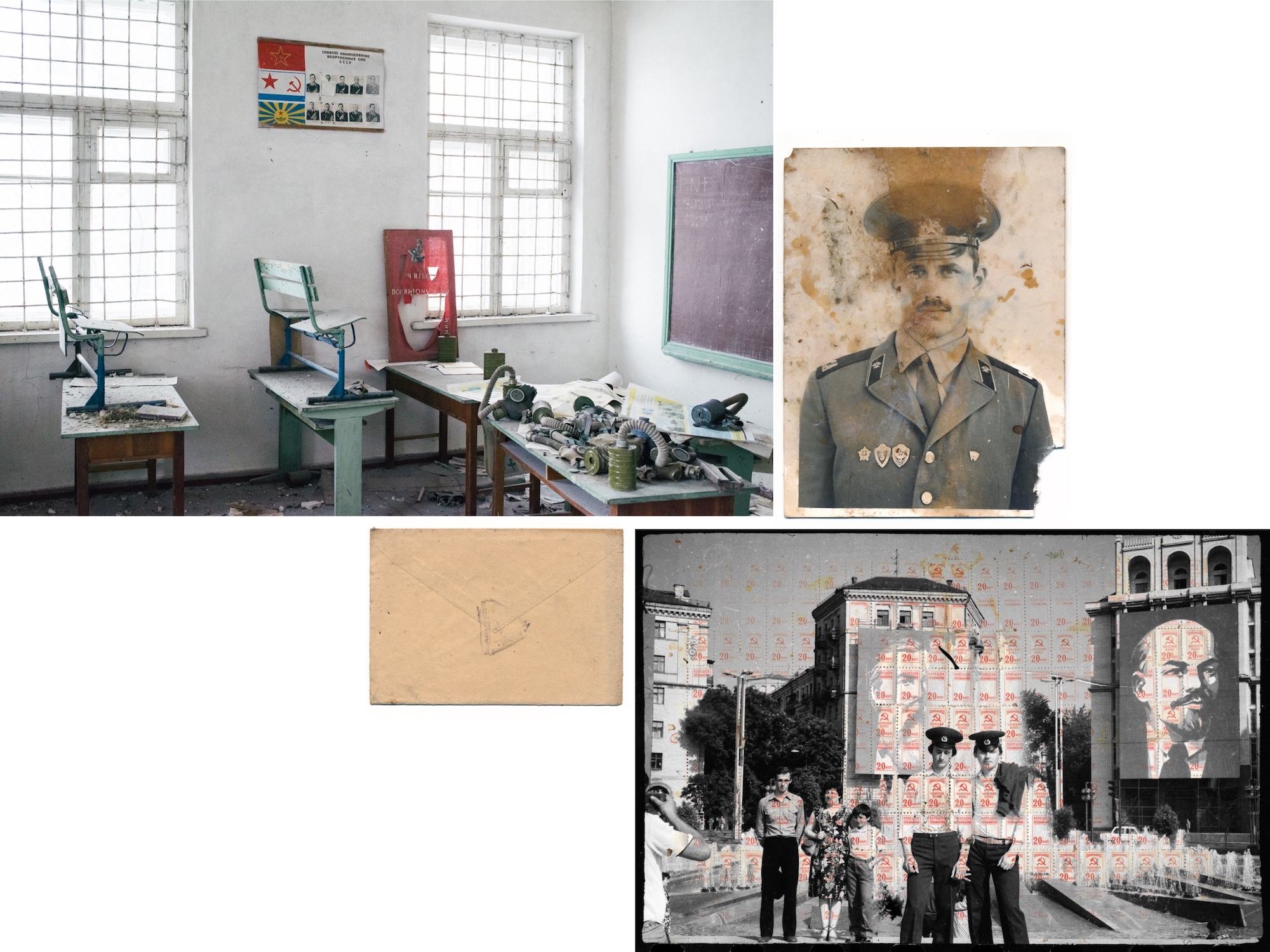
Dondyuk began working on the project in 2016, after realizing that our perception of the Zone was profoundly incomplete. The world remembers the explosion and its devastation, yet it has largely forgotten the everyday life that once defined the city of Pripyat and the surrounding villages before the disaster. For years, the artist traversed the Zone with his companions. Eventually, instead of relying solely on his own camera, he began to explore the abandoned apartments and ruined houses. There—sometimes beneath mud and radioactive dust—he discovered the most revealing remnants: personal letters, postcards, photographic prints, and negatives, from which he assembled his archive.
Chemical Collaboration – Time as a Co-Creator
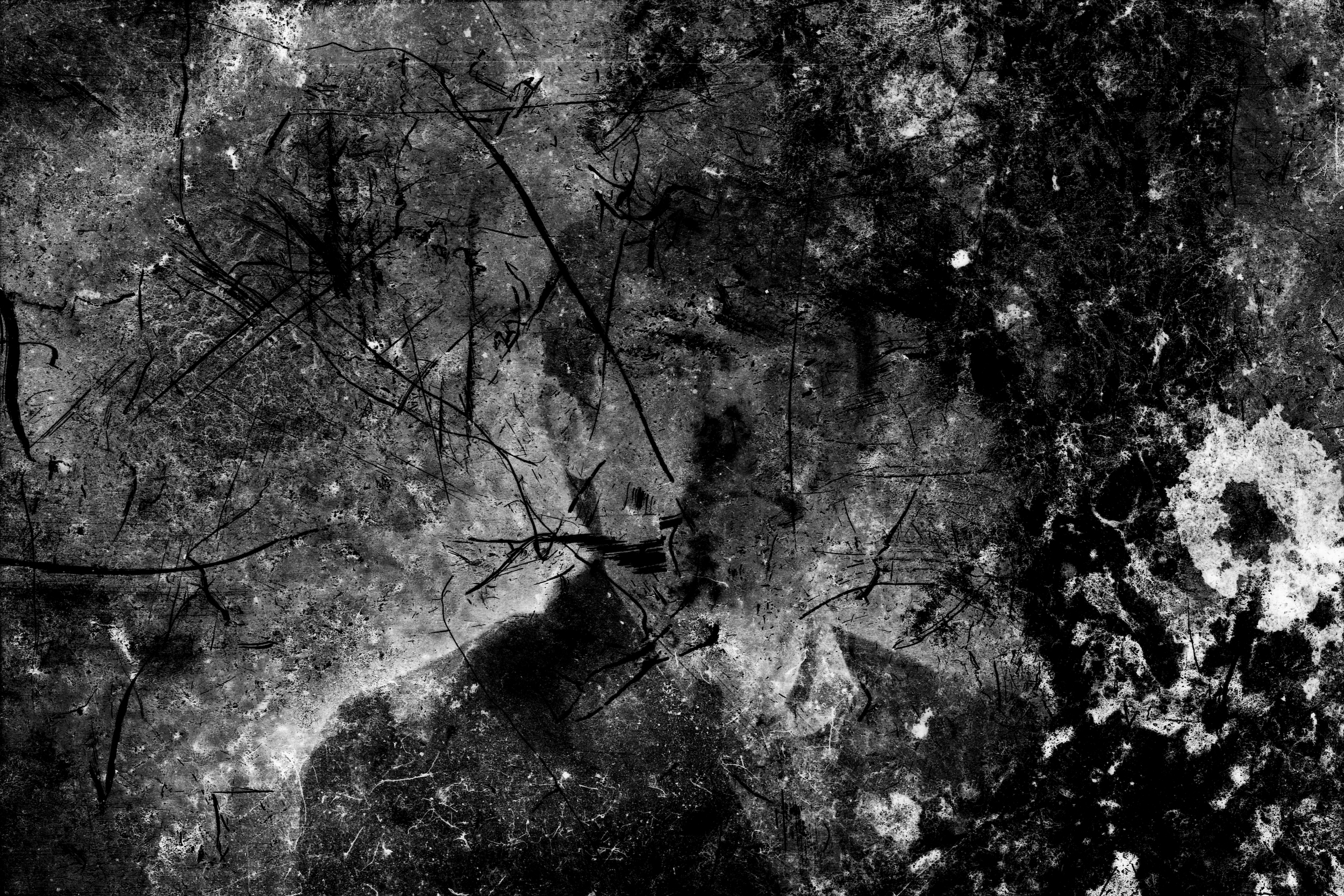
The physical condition of the recovered photographs reveals one of the exhibition’s most striking layers of meaning. Decades of exposure to radiation, moisture, and mold have not only damaged the material of these images but have also effectively transformed them. Dondyuk calls this process “chemical collaboration.” Nature and time have left abstract patterns, unique colors, and distortions on the prints, as if the Zone itself had imprinted itself on photographs taken in the years and decades before the disaster. Consequently, this technical degradation—the dissolution of the film emulsion—has become a metaphor for the slow erosion of memory. Through this work, the role of the photographer has also been transformed; Dondyuk has essentially become the curator of a collective legacy whose owners were forced to flee their homes in a single catastrophic moment, the day after the explosion, with the promise that they would soon return.
The Genesis of the Zone—Prophecies and Reflections
When interpreting Chornobyl, one cannot ignore the rich cultural fabric that surrounds the site. It is a strange and chilling coincidence that the concept of “the Zone” had already emerged in literature and cinema prior to the disaster. The Strugatsky brothers' 1972 novel, Roadside Picnic, and Andrei Tarkovsky’s 1979 film adaptation, Stalker, envisioned a sealed territory where the laws of physics collapse and human desires and fears materialize. Tarkovsky’s slow, meditative sequences and post-apocalyptic landscapes established—seven years before the explosion—the visual language through which we still imagine Chornobyl today.
Dondyuk’s photographs are rooted in this tradition, focusing simultaneously on presence and absence rather than mere spectacle. While fiction prophesied the Zone, the Nobel Prize-winning author and investigative journalist Svetlana Alexievich gave it a voice in her documentary novel Voices from Chernobyl. Through the testimonies of survivors, liquidators, and widows, Alexievich’s polyphonic work represents the micro-historical imprints of the catastrophe. Dondyuk’s archive is at times akin to this literary approach; what Alexievich achieved with words, Dondyuk achieves through images. He gathers forgotten or silenced stories to challenge official narratives—and above all, to confront oblivion.
Pop Culture and Virtual Radiation
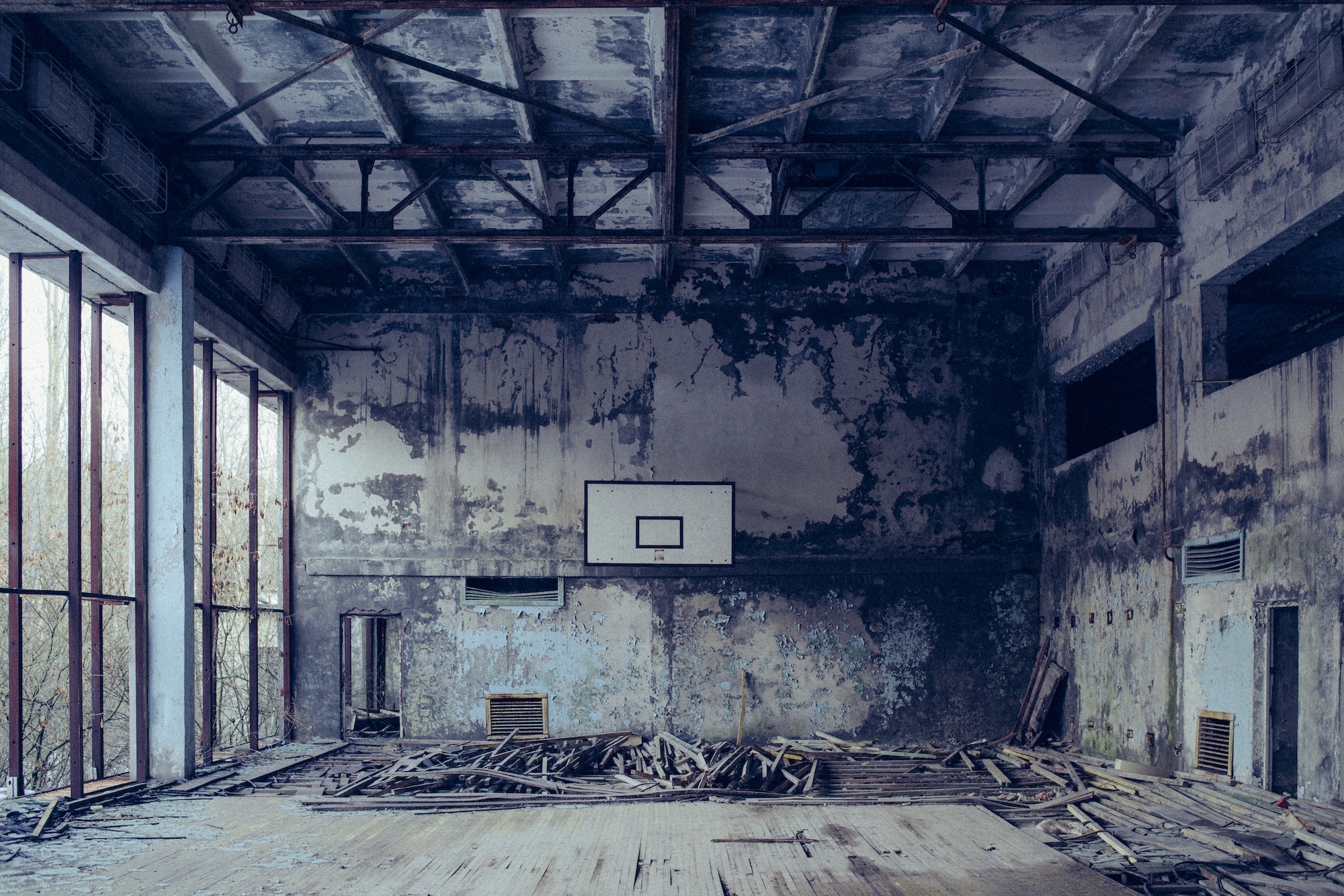
After the turn of the millennium, Chornobyl acquired further metaphorical layers. For entire generations, the S.T.A.L.K.E.R. video game series rendered the Zone traversable and consumable, transforming the sites of the tragedy into a kind of dark playground. However, pop-cultural representations often obscure reality; the Zone is not an adventure site calibrated for an adrenaline rush or a gritty film set—it is a living, throbbing wound. At the same time, the 2019 HBO series Chernobyl reignited the global discourse by emphasizing authenticity and systemic critique. Maxim Dondyuk’s exhibition becomes particularly relevant on this fortieth anniversary by halting the complete hollowing-out of the Chernobyl aesthetic. As selfies from Pripyat flood social media, Dondyuk guides the viewer back to one of photography’s essential acts: bearing witness. His own meditative, detached landscapes and cityscapes stand in stark contrast to the intimate warmth of the found family photographs, yet both bodies of work are tightly interwoven by the fact of the infernal tragedy.
Photography as a Tool for Rescuing Memory
In this project, one of photography’s fundamental potentials—the preservation of moments against decay—takes on a new meaning. Maxim Dondyuk does not simply create or collect images; he rescues the memory of individuals, families, and communities—indeed entire lives—from oblivion. The thousands of negatives and documents he has gathered serve as a kind of time capsule, opening to visitors within the spaces of the Mai Manó House on the fortieth anniversary of the tragedy. The title of the exhibition refers both to the geographical location and to the human mind’s tendency to bury painful memories. Dondyuk, however, encourages us to confront these fragments of memory. In doing so, he reminds us that Chornobyl is not a remote, closed chapter of history but a site of ongoing decay and transformation that remains far from benign. After forty years, the radiation may be receding, but the responsibility of memory is only growing—a fact brought home to us by the archive continually built by Maxim Dondyuk.
Suggested time to visit the exhibition: 30‒50 min.
Mai Manó House is not barrier-free.
Please note that on-site ticket sales in the exhibition spaces of Mai Manó House are temporarily suspended. Admission tickets for exhibitions and related programs are currently available exclusively online via the Liget+ platform:
Please note that audio and video recordings may be made on our events, from which Mai Manó House may use extracts to promote the institution's programmes
The exhibition is a part of the official program of Budapest Photo Festival 2026.


.jpg)
.jpg)